Fort Missoula: Buffalo Soldiers, Bicycles, and a Wartime Detention Camp
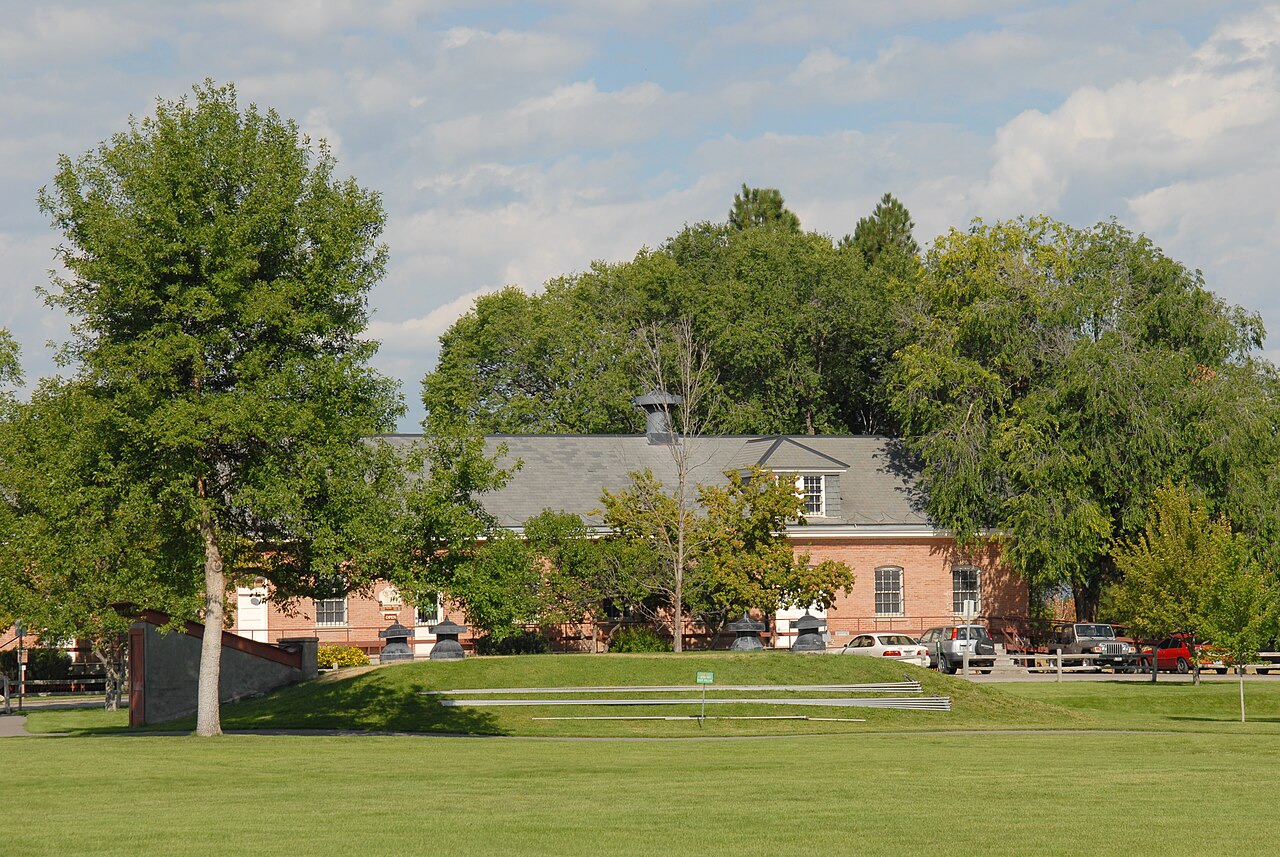
Tucked into the southwest corner of Missoula, a short drive from downtown, a cluster of white stucco buildings with red tile roofs sits among tall cottonwoods and open lawns. To most people passing through, Fort Missoula looks like a quiet historic park. But the grounds hold one of the most layered stories in western Montana — a frontier Army post, a daring experiment in military cycling, a wartime detention camp, and today a county museum and one of the largest public parks in the valley.
The Army established Fort Missoula as a permanent post in 1877, after local residents asked for protection amid tensions with Native American tribes in the region. Two companies of the 7th Infantry arrived on June 25 of that year. Unlike the stockaded forts of popular imagination, Fort Missoula was built as an "open fort," without surrounding walls — a design that said as much about the growing settlement around it as about any threat the soldiers expected to face.
The post didn't stay frozen in its frontier form. In the early 1900s the Army rebuilt much of it, and the Mission-style buildings that give the fort its distinctive look today — concrete and stucco walls under red clay tile roofs — date largely from that 1904 to 1912 reconstruction. Around eighteen of those buildings still form the core of the historic complex, and in 1987 the Fort Missoula Historic District was listed on the National Register of Historic Places.
The most celebrated chapter in the fort's history belongs to the 25th Infantry Regiment, an all-Black unit of so-called Buffalo Soldiers stationed at Fort Missoula from 1888 to 1898. In 1896, Lt. James A. Moss — a young white officer and 1894 West Point graduate — proposed testing whether bicycles could replace horses for moving troops across rugged country. The Army agreed, and on May 12, 1896, the 25th Infantry Bicycle Corps was born.
The corps started with training rides around western Montana, then tackled an 800-mile round trip to Yellowstone National Park between August 15 and September 8, 1896. Riding heavy bicycles loaded with rifles and gear, the soldiers covered rough roads and mountain terrain that tested whether the idea could work outside a parade ground.
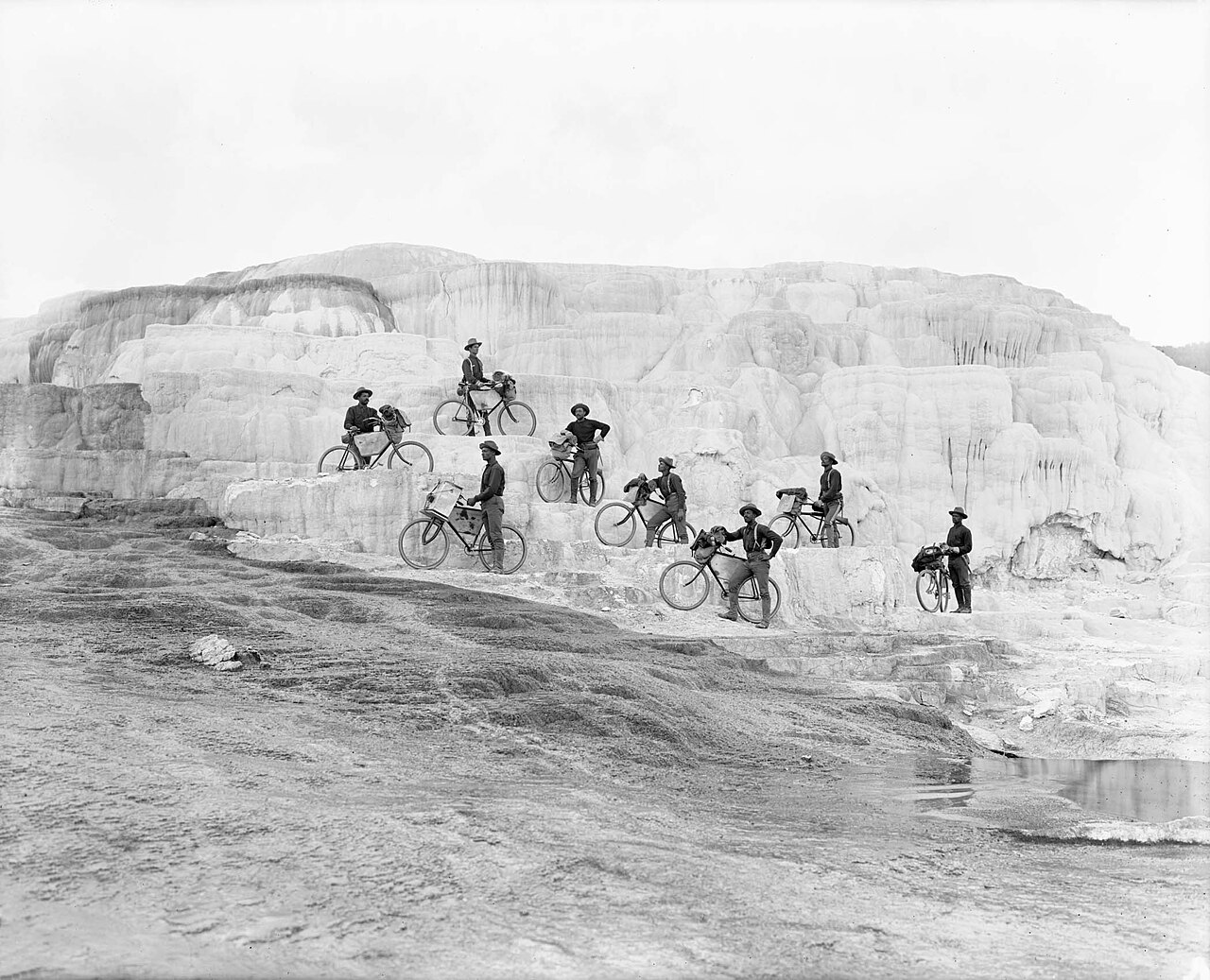
The following summer came the ride that made the unit famous. On June 14, 1897, twenty soldiers set out from Fort Missoula bound for St. Louis. They reached the city on July 24, having covered roughly 1,900 miles in about 40 days — an average of close to 48 miles a day — on a route that loosely followed rail lines through Montana, Wyoming, South Dakota, Nebraska, and Missouri. The National Park Service's history of the Twenty-Fifth Infantry Bicycle Corps tells the full story of the ride and the conditions the riders endured along the way.
Despite the achievement, the experiment ended almost as soon as it succeeded. The corps was disbanded in August 1897, and the Army never established a permanent bicycle unit. Still, the ride remains a remarkable piece of Missoula history — a feat of endurance by Black soldiers serving at a time when they faced discrimination both inside and outside the military, and a story Missoula has increasingly embraced as its own.
Fort Missoula's next major chapter was far less celebrated. In 1941, the Army turned the post over to the Immigration and Naturalization Service, part of the Department of Justice, which operated it as an Alien Detention Center until 1944. More than 1,000 Italian men were held there — not prisoners of war, but civilians, including merchant seamen, World's Fair employees, and the crew of the ocean liner Conte Biancamano, which had been seized in the Panama Canal.
The Italian detainees, who nicknamed the camp "Bella Vista" for its mountain views, were often allowed to work outside the fence, taking paid jobs in forestry, on farms, and in the region's sugar beet fields.
The fort's Japanese detainees had a harder experience. After the attack on Pearl Harbor, roughly 1,000 Japanese immigrant men — many of them longtime U.S. residents who were barred by law from becoming citizens — were brought to Fort Missoula and put through loyalty hearings. According to the historical museum, none of them was ever charged with disloyalty. The camp itself was surrounded by a tall fence and watched over by guard towers, a stark contrast to the open fort built more than six decades earlier.
Today, those layers of history are preserved by the Historical Museum at Fort Missoula, founded in 1975 as Missoula County's historical museum. Its grounds cover about 32 acres and include more than 20 historic structures, anchored by the Quartermaster's Storehouse that holds its main galleries. Its collection of more than 50,000 artifacts covers Missoula County and western Montana history, including an exhibit dedicated to the Alien Detention Center.
Right next door, Fort Missoula Regional Park shows the other side of the site's modern life. The 156-acre park, owned jointly by the City and County of Missoula and funded by a 2014 county parks and trails bond, opened its first phase in 2017 and was completed in 2018. Its amenities include 22 pickleball courts, eight tennis courts, seven softball diamonds, three playgrounds, and the Sargent Bozo Dog Park. On a summer evening it's full of softball games, pickleball and tennis matches, families on the playgrounds, and dogs racing around the off-leash park — a very different kind of activity than the grounds have seen before.
For visitors, the two halves of the site pair naturally. The museum is operated by Missoula County and is free for county residents, so a morning in the galleries and on the grounds can easily turn into an afternoon walking the park's paths or catching a game. The historic buildings themselves reward a slow loop on foot, past the Mission-style buildings that have stood on the grounds since the Army's early-1900s reconstruction.
That contrast is what makes Fort Missoula worth a visit. Few places in Montana let you stand on a single piece of ground and trace the frontier era, the story of the Buffalo Soldiers, the harder lessons of wartime, and the everyday life of a modern city. For a community that celebrates its heritage — Celtic and otherwise — the fort is a reminder that Missoula's history belongs to many different people, and that all of their stories are part of the place.